
Dumpster Sizes: Compare All Five Roll-Off Containers
Five sizes cover everything we haul, and picking between them is simpler than it looks. The dimensions and typical scopes are laid out side by side below, and underneath that are the only two questions that actually decide which box goes on your job.
Pick a size, pick a delivery date, and we handle the haul.
The five containers
Same fleet, same lime green, photographed the same way so the difference in height and length is the difference you would actually see on your site. There is a person alongside each one for scale.
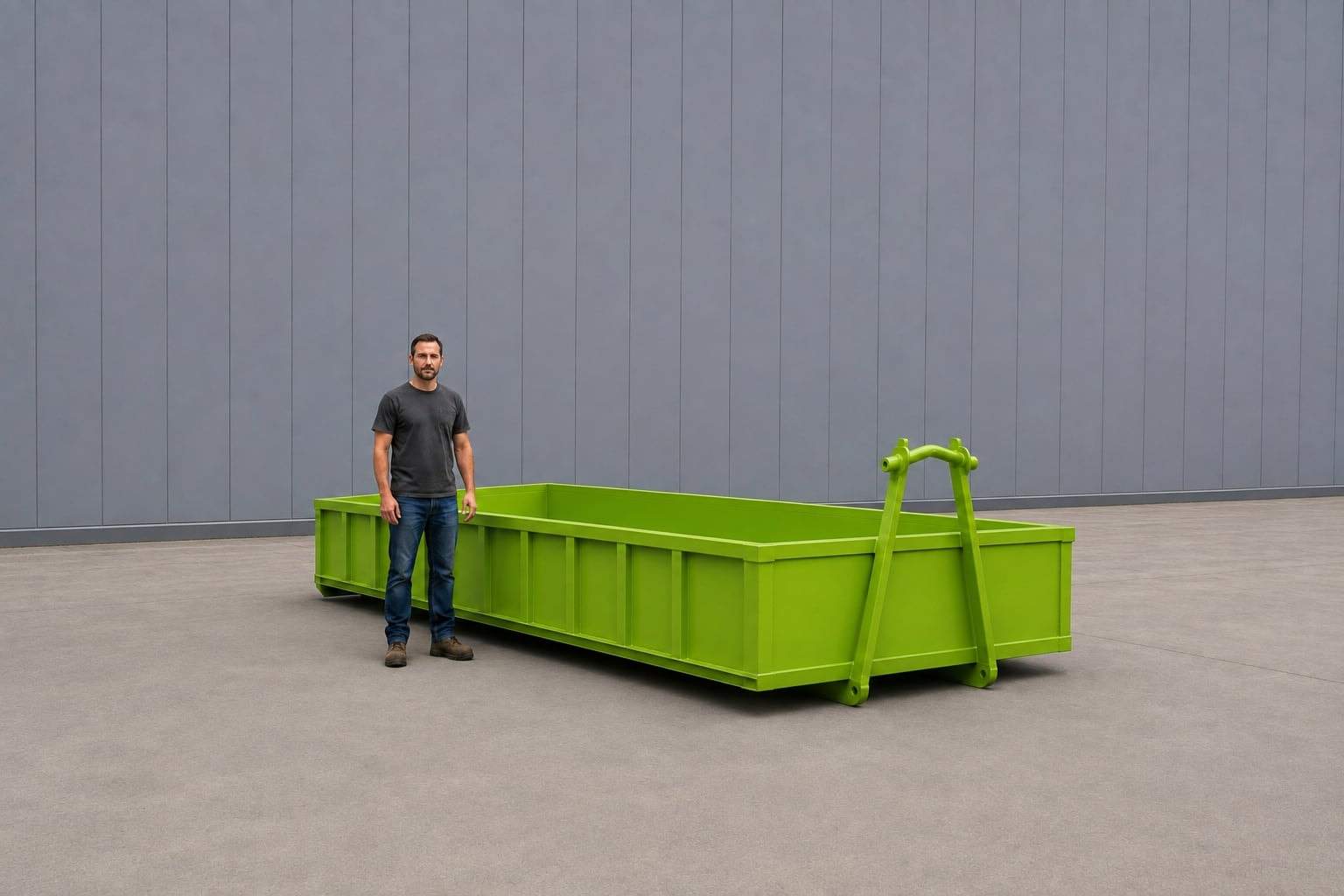
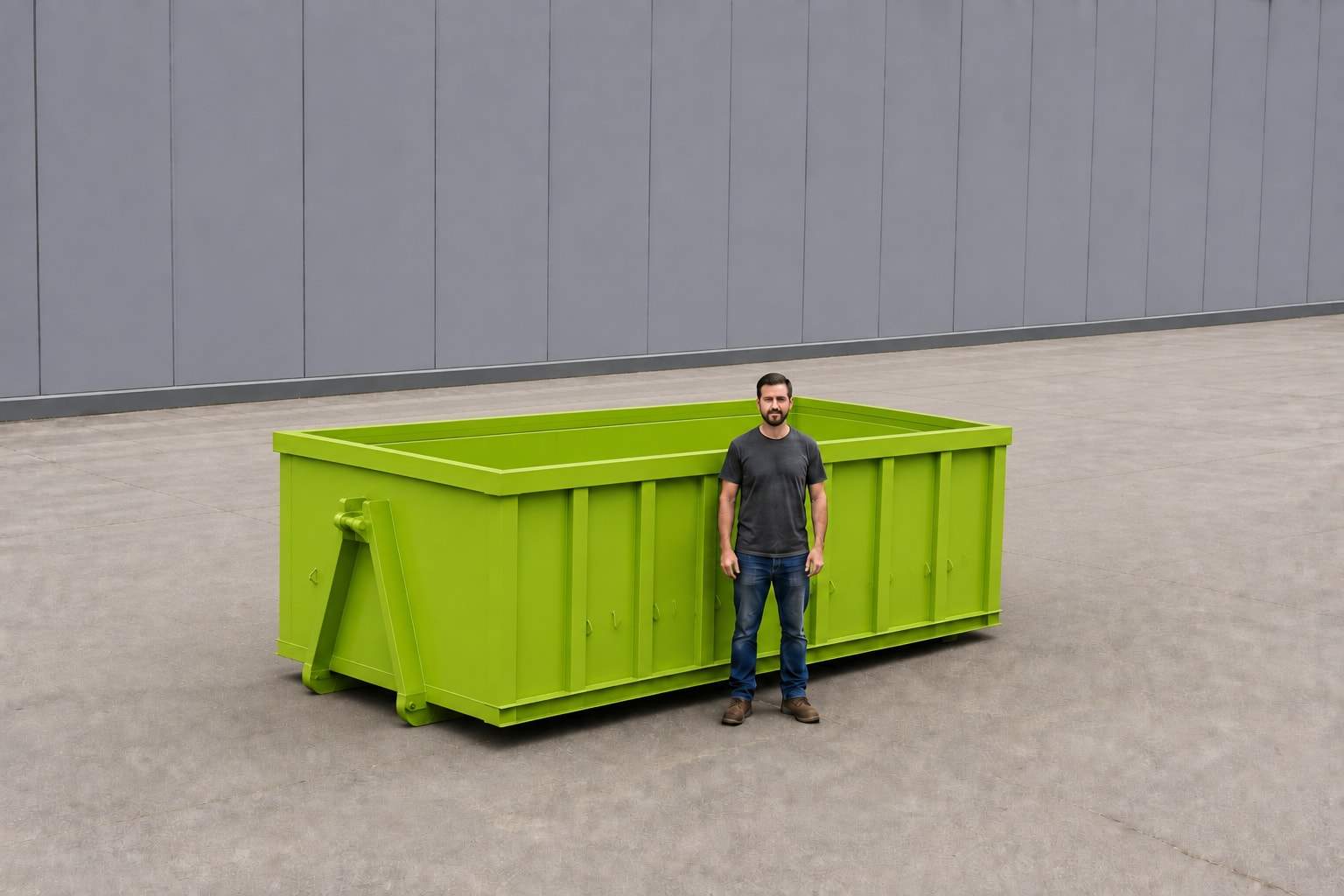
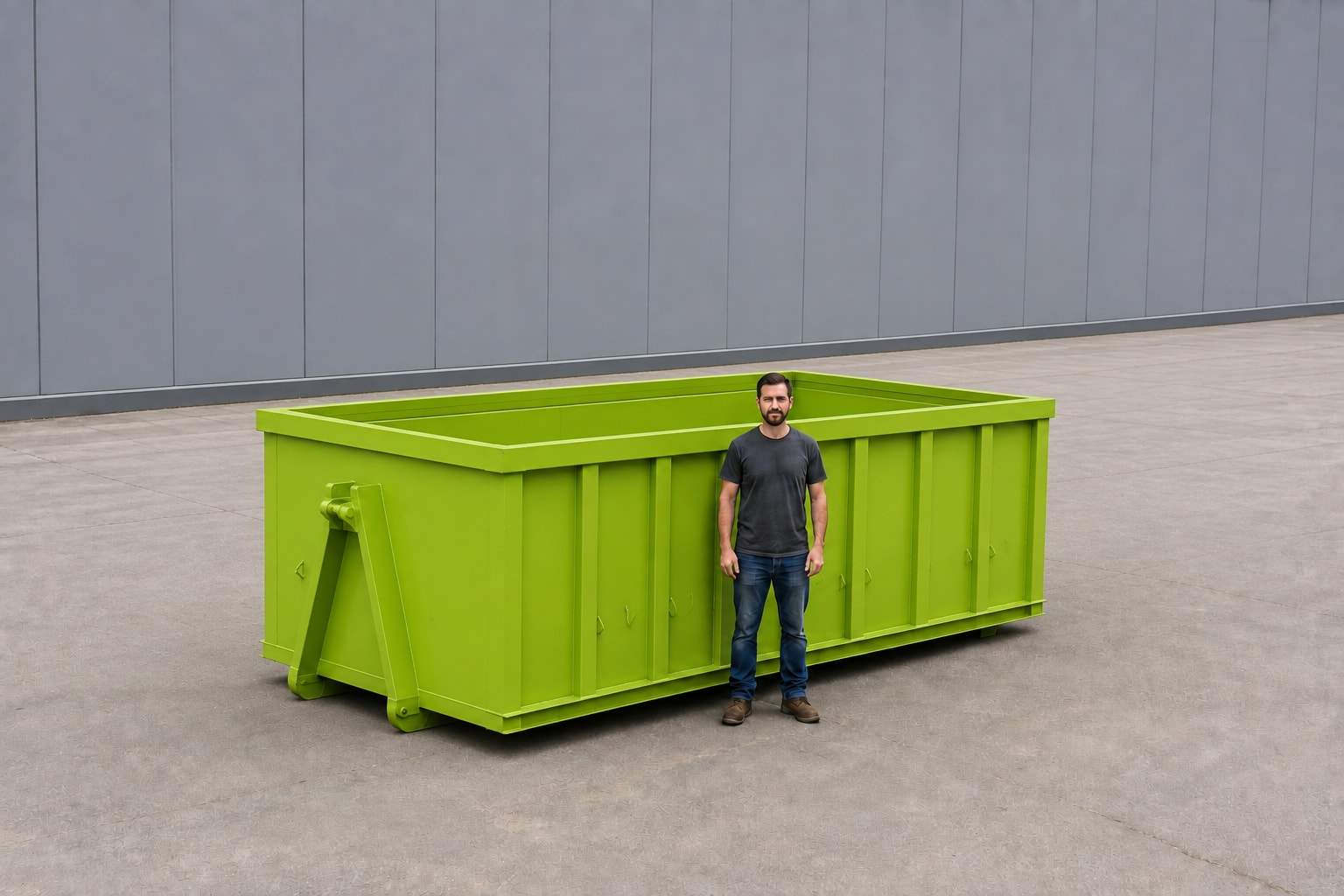
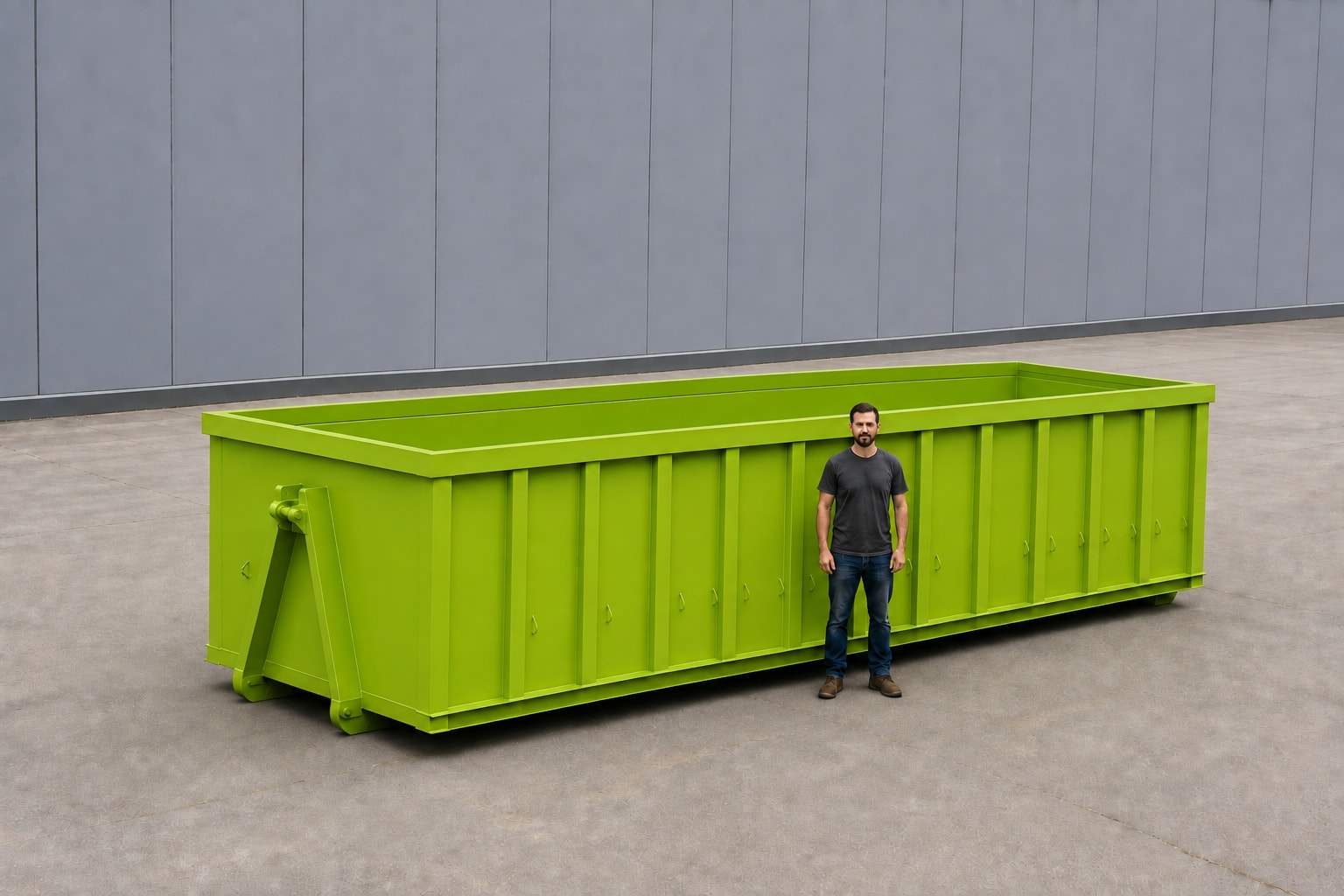
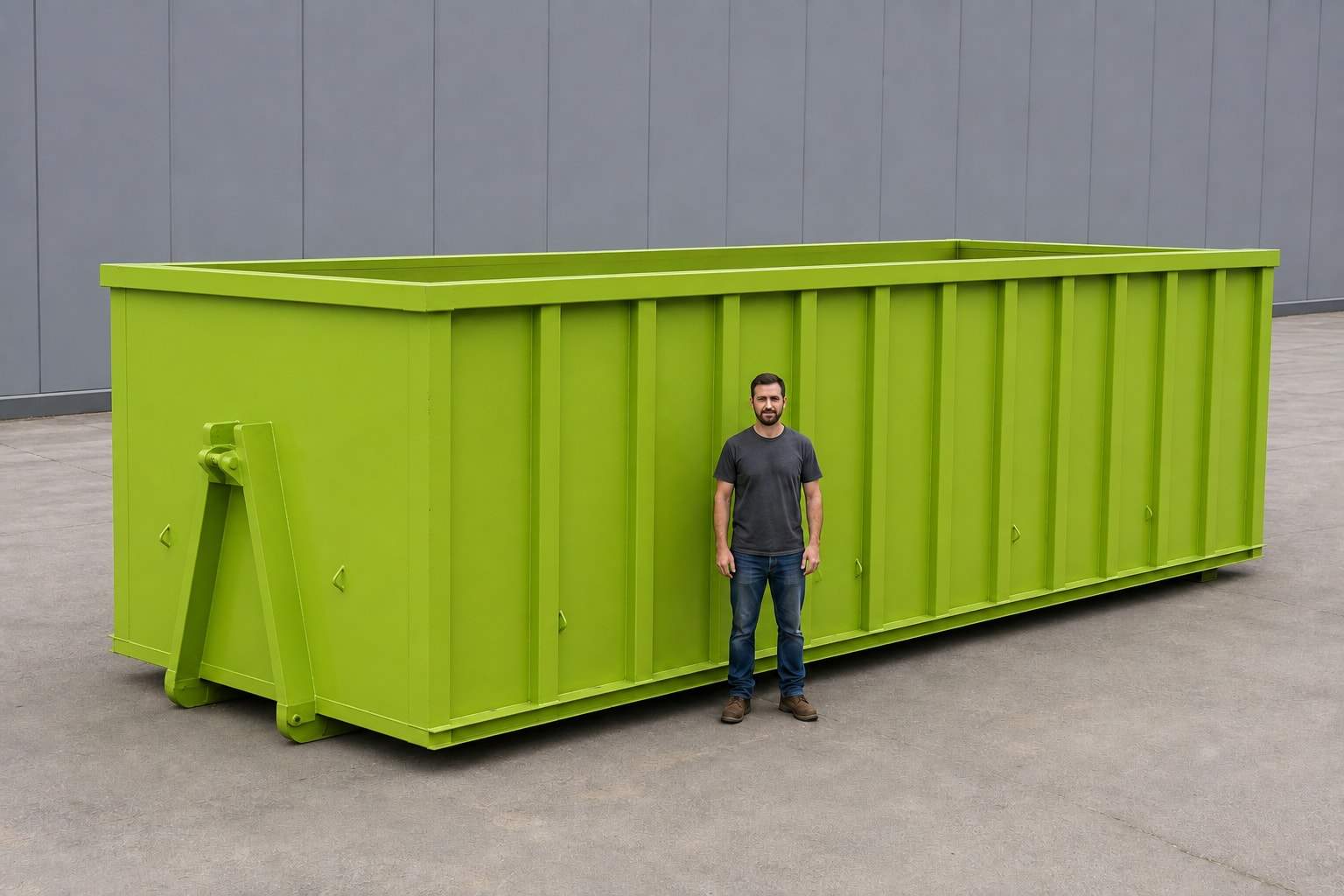
Container size comparison
| Container | Dimensions | Walls | Best for | Heavy material |
|---|---|---|---|---|
| 10 Yard Rock Box | 20 × 8 × 2 ft | 2 ft | Concrete, dirt, rock, brick, asphalt. Slab tear-out, footings, excavation spoils, hardscape and masonry removal. | Yes — only this one |
| 15 Yard Roll-Off | 12 × 8 × 5 ft | 5 ft | Composition roof tear-off, a bathroom or single-room gut, small demolition, tight lots. | No |
| 20 Yard Roll-Off | 14 × 8 × 5.5 ft | 5.5 ft | Kitchen and whole-floor remodels, flooring tear-out, roofing on larger structures, general C&D. | No |
| 30 Yard Roll-Off | 20 × 8 × 6 ft | 6 ft | New build, commercial interior demolition, large remodels, land clearing. Hand-loaded work. | No |
| 40 Yard Roll-Off | 20 × 8 × 8 ft | 8 ft | Full structure demolition, large commercial scopes, high-volume clearing. Machine- or chute-fed work. | No |
Dimensions are length × width × height in feet. Every container has a full-width door at the rear. Delivery clearance follows the truck: the 15 and 20 ride our smaller trucks and need about 30 ft of straight approach and 10 ft of overhead clearance; the 10, 30 and 40 ride our full-size CDL trucks and need about 60 ft of straight approach and 15 ft of overhead clearance.
Question one: is the material heavy?
This is the question that matters most, because getting it wrong stops the job rather than just costing you capacity. Concrete, dirt, rock, brick, and asphalt are dense enough that a container full of them exceeds what a truck can legally carry on a public road.
All of it goes in the 10-yard rock box, and none of it goes anywhere else. That box is built heavier through the floor and sidewalls, and it is capped at 2 feet of wall on purpose — dense material reaches the hauling limit long before it would fill a taller box, so the rock box is sized to be filled rather than to look big. The low wall pays off twice: you can shovel or wheelbarrow straight over the rail without building a ramp. Everything the rock box takes is set out in full on its own page.
Put heavy material in any other size and the driver refuses the pickup on haul day. The container does not move. It sits loaded exactly where it was set until somebody hand-offloads enough material to bring it under weight. If your scope produces both — a slab coming out alongside a remodel — order a rock box for the dense material and a volume container for the rest, and say so at booking so both land the same day.
Question two: is a person loading it, or a machine?
If the material is not heavy, the remaining choice is about volume, and at the top of the range it comes down to wall height rather than job type. This is the part most size guides get wrong.
The 30 and the 40 are the same container in every respect that affects your site: both 20 × 8, both needing the same delivery clearance, both taking the same material. The only difference is that one has six-foot walls and the other has eight-foot walls. Six feet is a height a person can pitch debris over all day. Eight feet is not — it is above shoulder height, and it wants material arriving off a machine, down a chute, or over the side from an upper level.
So: hand-loaded work tops out at the 30, and it is the largest box that stays practical when the crew is doing the lifting. Machine-fed work should take the 40, where the extra height costs nobody anything and the same material leaves in fewer hauls. On a scope already running swap-outs twice a week, that is the change worth making.
Below that, the question is just how much debris the scope produces before it ends. Our 15-yard box suits a single room or one of the smallest roofs, where a bigger container would mean paying for space the job was never going to fill. The 20-yard size is the one we deliver most, because a kitchen, a whole-floor remodel, or a mixed C&D scope usually runs start to finish on one box. If you are genuinely unsure between those two, take the 20 — a second haul on a 15 costs more than one haul on a 20.
Access: when the site decides for you
Occasionally the box is chosen by the approach rather than the scope. The 15 and 20-yard containers are shorter — 12 and 14 feet against 20 for everything else — and they go out on smaller trucks. Between those two things, they reach places a full-size roll-off truck cannot: off an alley, behind a building on the service side, down a driveway that dead-ends with nowhere to turn around.
What delivery needs depends on the truck. The 15 and 20 ride our smaller trucks and need about 30 feet of straight approach and about 10 feet of overhead clearance; the 10, 30 and 40 ride our full-size CDL trucks and need about 60 feet of straight approach and about 15 feet of overhead clearance. A low container is not automatically an easier one to place — the rock box in particular is a full 20 feet long despite its low walls, rides the CDL trucks, and takes exactly the same ground as a 40. If access is the constraint on your job, describe the approach when you book: the pinch point, what is overhead, and where a truck would have to turn around. Dispatch will tell you straight whether it works before you schedule a crew around it.
Rather talk it through? Call the King County office and you will get someone who knows the routes.
(425) 522-3717How the container comes back
Three ways, and which one suits a job is decided by the site rather than by preference.
A swap-out is the usual answer. We bring an empty container, take the full one away on the same visit, and the crew keeps loading. Nothing waits on a round trip, which is why this is what most jobs book without ever needing to think about it.
A dump and return is for sites that cannot hold two boxes. A swap needs room for both containers at the same moment, even briefly. On a single narrow approach, a driveway with one way in and out, or a site with nowhere to stage a second box, that room does not exist — so the container leaves, gets emptied, and comes back to the same spot. It is the same constraint that decides which container fits in the first place, and our page on constrained sites covers how to describe an approach so we get this right before the truck is loaded.
A live load is for jobs where nothing can be left behind. The truck stays, the crew loads directly, and it leaves with the material. That suits a site where a container cannot remain — a road that has to reopen, ground that cannot be occupied, a scope short enough that setting a box down and collecting it later makes no sense.
Say which one your site needs when you book, or describe the approach and we will work it out. It is a scheduling question either way, and it is far easier settled in advance than on the day.
Where we deliver
All five sizes run out of both yards. Renton dispatches King County deliveries and the Canyon Road yard in the Puyallup valley handles Pierce County deliveries, with the county line making no difference to which container you can get.
- container rental in Renton
- Seattle roll-off delivery
- Kent construction debris
- Bellevue project containers
- Tacoma dumpster rentals
- delivery in Puyallup
- roll-offs across Lakewood
- containers in Sumner
Those are the busiest, not the boundaries — coverage runs from Shoreline and the Eastside down through the Green River valley, across the Pierce County line into the Puyallup valley and the plateau, and west to the water. Both county pages list every city we reach.
Common questions about container sizes
What size dumpster do I need?
Answer two questions and the size picks itself. First: is the material heavy? Concrete, dirt, rock, brick, and asphalt go in the 10-yard rock box and nowhere else. Second, if it is not heavy: is a person loading it or a machine? Hand-loaded jobs top out at the 30, with its 6-foot walls. Machine- or chute-fed jobs can take the 40 and its 8-foot walls. Everything below that is a question of how much debris the scope produces.
Which container takes concrete and dirt?
Only the 10-yard rock box. It is the single container rated to carry dense material, and its 2-foot walls exist so a crew can shovel or wheelbarrow over the rail without a ramp. Load concrete, dirt, rock, brick, or asphalt into any other size and the driver refuses the pickup on haul day — the box stays loaded on your site until the crew offloads it.
Do the bigger containers need more room to deliver?
Delivery clearance depends on which truck brings the box. The 15 and the 20 ride our smaller trucks and need roughly 30 feet of straight approach and 10 feet of overhead. The 10-yard rock box, the 30 and the 40 ride our full-size CDL trucks and need roughly 60 feet of straight approach and 15 feet of overhead. The box matters too: the 10, 30, and 40 are all 20 feet long; the 15 is 12 feet and the 20 is 14 feet. Between the smaller trucks and the shorter boxes, the 15 and 20 reach alleys, service sides of buildings, and dead-end driveways the larger sizes cannot.
Can I load material through a door instead of over the side?
Yes. Every container we run has a full-width door at the rear, so anything easier to walk or wheel in than lift over the rail can go through it. On the 10-yard rock box most crews never open it, because at 2 feet the rail is already at a working height.